

Many homeowners are surprised when a Chesterfield roofing contractor recommends replacing a “30-year roof” after only 20 to 25 years. After all, the name itself sounds like a guarantee. But in reality, a roof’s advertised lifespan is based on ideal conditions — and very few homes experience ideal conditions for three straight decades.
The truth is that most asphalt shingle roofs begin showing significant wear well before the 30-year mark. Weather exposure, installation quality, attic ventilation, maintenance history, and homeowner priorities all play a role in shortening a roof’s practical lifespan. In many cases, homeowners choose replacement proactively to avoid expensive interior damage, insurance complications, or declining property value.
The “30-Year” Label Isn’t a Guarantee
One of the biggest misconceptions in roofing is that a 30-year shingle automatically lasts 30 years. In reality, the number refers more to the product category and laboratory-tested durability than a guaranteed service life.
Manufacturers test shingles under controlled conditions that rarely reflect real-world environments. Extreme temperatures, UV exposure, storms, humidity, algae growth, poor ventilation, and installation variables can all accelerate aging.
For many homes, especially in regions with harsh summers, severe storms, or fluctuating temperatures, 20 to 25 years is a far more realistic lifespan for an asphalt roof.
Weather Is the Biggest Lifespan Killer
Roofs endure nonstop exposure to the elements every day of the year. Over time, even high-quality materials begin to deteriorate under repeated weather stress.
Sun and UV Damage
Constant ultraviolet exposure slowly dries out asphalt shingles. If you’re in central Virginia, then you know we routinely get extremely high temperatures. A roofing system is taking the brunt of the sun’s heat and harmful UV rays during the brutal Virginia summers. As shingles age, they lose flexibility and protective granules begin wearing away. This process weakens the roof’s ability to shed water and resist wind damage.
Homes in areas with long, hot summers often experience accelerated shingle deterioration years earlier than expected.
Storm Damage
Wind, hail, heavy rain, and falling debris can shorten a roof’s lifespan dramatically. Even minor storm damage weakens shingles over time.
A roof may appear intact from the ground while actually suffering from:
- Lifted shingles
- Broken seal strips
- Granule loss
- Exposed nail heads
- Soft decking beneath the shingles
Repeated storm exposure often pushes homeowners toward roofing replacement earlier than originally planned.
Temperature Swings
Expansion and contraction from seasonal temperature changes gradually stress roofing materials. Over time, shingles can crack, curl, or lose adhesion.
In climates with freezing winters and hot summers, this cycle repeats thousands of times during the life of the roof.
Our region, including Chesterfield county, is known for rapid and frequent weather changes – sometimes experiencing what feels like 3 seasons in one day!
Poor Ventilation Can Age a Roof Prematurely
Attic ventilation is one of the most overlooked factors affecting roof lifespan.
A poorly ventilated attic traps heat and moisture beneath the roof system. Excess heat essentially “bakes” shingles from underneath, while trapped moisture can damage decking and insulation.
Signs of ventilation-related roof aging include:
- Curling shingles
- Premature granule loss
- Mold or mildew in the attic
- Higher energy bills
- Ice dam formation in winter
Even premium roofing materials may fail years early if ventilation issues are not corrected.
Installation Quality Matters More Than Homeowners Realize
A roof is only as good as the installation behind it.
Improper nailing, poor flashing work, inadequate underlayment, or shortcuts during installation can significantly reduce a roof’s lifespan. Unfortunately, installation problems may remain hidden for years before leaks or visible damage appear.
Common installation issues include:
- Incorrect nail placement
- Inadequate attic ventilation design
- Improper flashing around chimneys and valleys
- Shingles installed over damaged decking
- Insufficient sealing against wind uplift
Many homeowners replace roofs early not because the shingles themselves failed, but because the roofing system underneath was compromised.
Small Problems Become Expensive Problems
One of the biggest reasons homeowners replace roofs before total failure is financial risk.
Waiting too long can lead to:
- Interior water damage
- Mold growth
- Rotted roof decking
- Damaged insulation
- Ceiling stains
- Structural repairs
A roof leak rarely stays isolated. Water intrusion often spreads behind walls, into attics, and throughout the home before becoming visible.
Many homeowners decide that replacing the roof proactively is less expensive than dealing with ongoing repair costs and potential interior restoration.
Insurance Concerns Influence Replacement Decisions
Insurance companies have become increasingly cautious about aging roofs.
Some insurers may:
- Increase premiums on older roofs
- Limit coverage
- Require inspections
- Deny certain claims due to roof age
- Refuse policy renewals altogether
Even if a roof is technically functional, Chesterfield homeowners may replace it simply to maintain insurability or avoid future claim disputes.
In today’s insurance market, a 20- to 25-year-old roof is often viewed as high risk.
Energy Efficiency Starts Declining
As roofing systems age, they often become less energy efficient.
Older roofs may absorb more heat, allow air leakage, or suffer from ventilation deficiencies that increase HVAC strain. Homeowners sometimes notice:
- Higher cooling bills
- Uneven indoor temperatures
- Excess attic heat
- Increased humidity indoors
A new roofing system can improve ventilation performance and energy efficiency while reducing monthly utility costs.
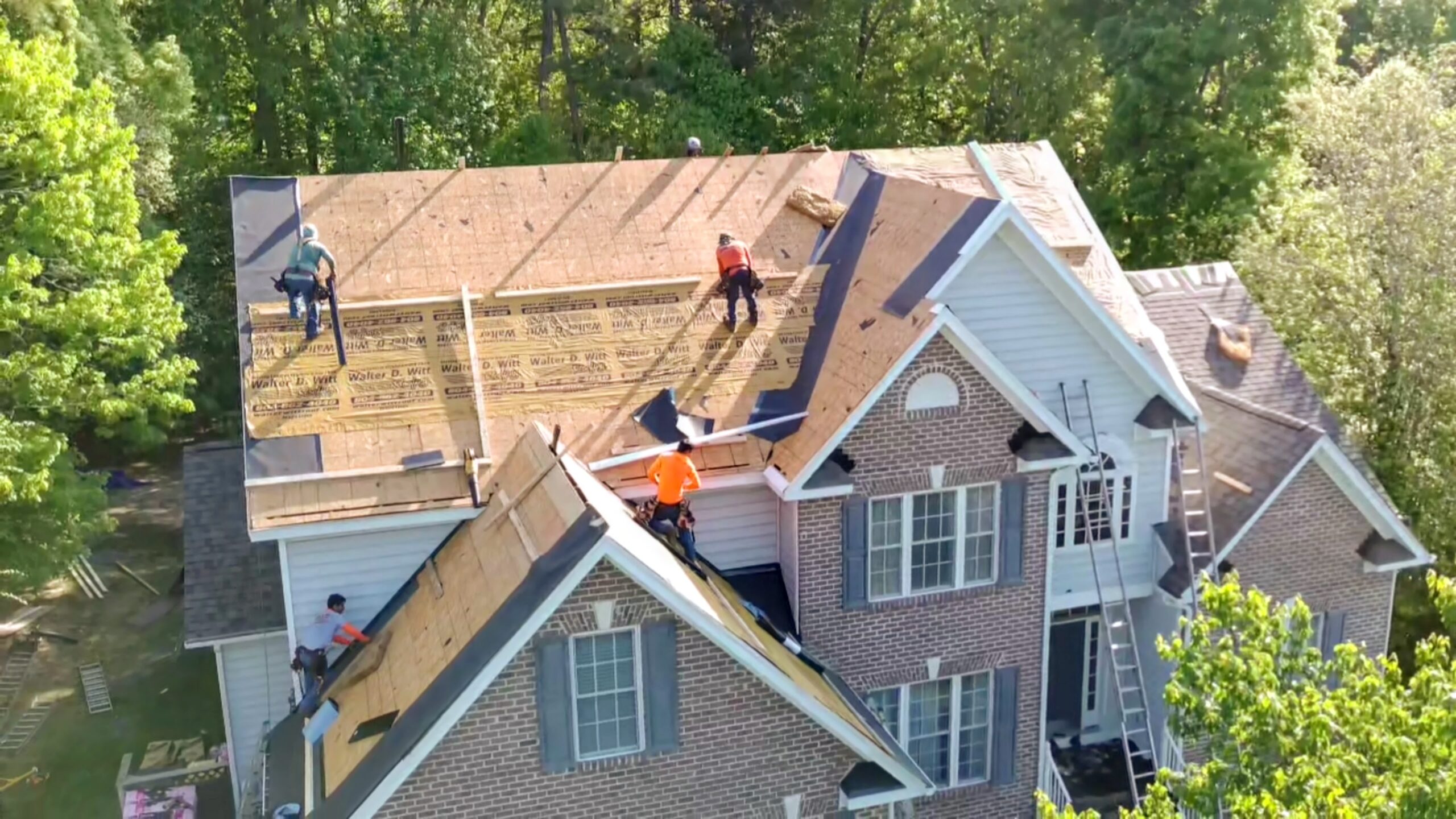
Chesterfield Roof Replacement in the Real World
In the image above, our team at Walter D. Witt Roofing replaced the original roof on a Chesterfield home built in 2003 during the Spring of 2026. This home is located in the Hampton Park neighborhood off Hull Street Rd in western Chesterfield County. Due to our punishing weather in central Virginia this roof was already showing signs of age, but the repeated heavy snow and ice during the winter of 2025-2026 finally caused issues that needed immediate repair.
Homeowners Replace Roofs Before Selling
Many homeowners choose to replace an aging roof when preparing to sell their home.
An older roof can:
- Lower resale value
- Complicate inspections
- Delay closings
- Discourage buyers
- Reduce negotiating power
Buyers are often hesitant to purchase a home with a roof nearing the end of its useful life. A new roof provides reassurance and can improve curb appeal dramatically.
In competitive real estate markets, roof replacement is often viewed as an investment rather than simply a repair expense.
Visible Aging Creates Concern
Even without active leaks, visible signs of aging often motivate homeowners to act sooner rather than later.
Common warning signs include:
- Curling shingles
- Bald spots from granule loss
- Black streaking or algae growth
- Sagging roof lines
- Frequent repairs
- Loose or missing shingles
When a roof begins showing multiple signs of deterioration, homeowners often decide replacement is safer and more cost-effective than ongoing patchwork repairs.
The Cost of Waiting Can Be Higher
Many homeowners initially try to maximize every remaining year from an aging roof. While understandable, delaying replacement too long can backfire financially.
The longer an older roof remains exposed to weather, the greater the chance of:
- Emergency leak repairs
- Structural damage
- Higher insurance deductibles
- Increased repair frequency
- More expensive full replacement later
Replacing a roof proactively allows homeowners to plan financially, choose materials carefully, and avoid emergency situations.
A Roof’s “Useful Life” Is Different Than Its “Maximum Life”
Perhaps the most important distinction is this: a roof can still technically function while no longer performing reliably.
A 30-year roof may survive 30 years under perfect conditions, but many homeowners decide replacement earlier because:
- Reliability has declined
- Repairs are becoming frequent
- Storm vulnerability increases
- Insurance concerns grow
- Energy performance drops
- Water intrusion risk rises
In practical terms, the roof has reached the end of its useful life — even if it has not completely failed.
Final Thoughts
Replacing a roof after 20 to 25 years does not necessarily mean the roof failed prematurely. In many cases, it reflects the realities of weather exposure, aging materials, ventilation issues, insurance requirements, and homeowner risk management.
For most homeowners, roof replacement is ultimately about protection. A proactive replacement can prevent major damage, improve energy efficiency, preserve home value, and provide peace of mind long before catastrophic failure occurs.